


The phone rings. Someone says they’re calling about your IRS debt – but they’re not from the IRS. They’re from a private collection agency. Is this a scam?
Maybe. Or maybe your tax debt has been assigned through IRS private debt collection to one of the IRS’s authorized Private Collection Agencies (PCAs).
Under Internal Revenue Code Section 6306, IRS private debt collection is legally required for certain inactive tax debts. Since the program restarted in 2017, these agencies have been contacting taxpayers about legitimate IRS debts. But the program also created perfect cover for scammers.
I’ve represented taxpayers dealing with private collectors for years. The system confuses even people who understand tax law. The IRS sends your debt to a private company, but you still owe the IRS. The collector can’t actually collect payment themselves. And you have rights most taxpayers don’t know exist.
This isn’t another collection call you can ignore. Understanding how this program works determines whether you pay thousands more than necessary or find a better solution.
Understanding how IRS private debt collection works is essential to protecting your rights and avoiding unnecessary payments.
What Is the IRS Private Debt Collection Program?

he IRS private debt collection program operates under specific legal authority and follows strict statutory guidelines established by Congress. Congress mandated this program through the Fixing America’s Surface Transportation (FAST) Act in December 2015. The program launched in April 2017.
The IRS identifies certain tax debts that meet specific criteria, then assigns those debts to one of four authorized private collection agencies. These agencies contact taxpayers and attempt to collect payment – but every dollar collected goes directly to the IRS.
The private collectors work on commission, earning a percentage of what they collect. This creates an incentive structure every taxpayer needs to understand. This commission-based structure is a defining feature of IRS private debt collection and directly impacts how collectors approach taxpayers. The collector wants you to pay as much as possible, as quickly as possible. They’re not focused on finding the best solution for your situation.
When you deal with the IRS directly instead of through IRS private debt collection, revenue officers must follow Internal Revenue Manual procedures that require them to consider your financial situation. Private collectors? They’re following a different playbook entirely.
The Four Authorized Private Collection Agencies
The IRS currently contracts with four private collection agencies under the IRS private debt collection program. If you’re contacted by any company not on this list, it’s either a scam or an error:
- CBE Group – Located in Waterloo, Iowa. Phone: 1-800-910-5837. Website: cbegroupinfo.com
- Coast Professional – Located in Tempe, Arizona. Phone: 1-888-928-0510. Website: coastprofessionalinc.com
- Performant – Located in Livermore, California. Phone: 1-844-807-9367. Website: performantcorp.com
- Pioneer – Located in Horseheads, New York. Phone: 1-800-448-7268. Website: pioneercreditrecovery.com
Before any contact under IRS private debt collection begins, the IRS sends Letter 3711A, Notice of Intent to Refer Your Account to a Private Collection Agency. After the transfer, you receive Letter CP40 naming the specific agency handling your debt.
Then the private collection agency sends their own letter via U.S. Postal Service before calling. This letter identifies them as a contracted IRS collector and provides their contact information.
No legitimate private collector calls without this paper trail first. Missing documentation is one of the most common red flags associated with IRS private debt collection scams. If someone calls claiming to be from one of these agencies before you’ve received written notice from both the IRS and the agency, you’re dealing with a scam.
Which Tax Debts Qualify for IRS Private Debt Collection
The IRS doesn’t assign every tax debt to private collectors. The law sets specific criteria.
Under IRS private debt collection rules, your debt gets assigned when it is considered inactive under statutory criteria – when your account has been removed from active IRS inventory for more than one-third of the applicable statute of limitations period, or if no IRS employee has been assigned to your case for at least 365 days.
In practice, if you owe taxes from 2020, the IRS has 10 years from the assessment date to collect. If your account sits inactive for more than three years and four months, it becomes eligible for the private collection program.
But certain debts are excluded from IRS private debt collection even if they meet the inactive criteria:
- Innocent spouse cases – If you’ve filed Form 8857 requesting innocent spouse relief, your debt stays with the IRS
- Deceased taxpayer accounts – Estate tax debts aren’t assigned to private collectors
- Taxpayer Advocate Service cases – If TAS has open involvement in your case, it remains with the IRS
- Pending installment agreement requests – If you’ve applied for a payment plan, your account won’t be assigned to a PCA
- Pending Offer in Compromise applications – Active OIC cases stay with the IRS
- Cases in appeals or litigation – Any account in the formal appeals process or in Tax Court remains with the IRS
- Identity theft victims – Debts involving identity theft claims don’t go to private collectors
- Taxpayers in designated combat zones – Active duty military in combat zones are excluded
The IRS also won’t assign your debt to a private collector if you’re in bankruptcy or if your account is subject to a due process hearing request under IRC Section 6330.
Your Rights When Dealing with Private Debt Collectors
IRC Section 6306 establishes specific protections for taxpayers involved in IRS private debt collection. These are legal requirements every private collection agency must follow.
Private collectors cannot take enforcement actions against you. They cannot file a Notice of Federal Tax Lien. They cannot issue a levy on your wages, bank accounts, or property. They cannot seize your assets. These limitations are central to IRS private debt collection and distinguish private collectors from IRS enforcement personnel. Every enforcement action remains exclusively in IRS hands.
They also cannot sue you in court to collect the debt.
What can they do? They can contact you by phone and mail to request payment. They can negotiate installment agreements where your monthly payment doesn’t exceed $50 or the total repayment period doesn’t exceed 60 months. That’s it.
But here’s the critical part of IRS private debt collection—you do not have to deal with them at all. You have the absolute right to request that your account be returned to the IRS. No explanations required. You simply tell the private collector to send your case back.
The collection agency must comply with this request. They have no choice in the matter.
Private debt collectors must also follow the Fair Debt Collection Practices Act (FDCPA). This federal law prohibits harassment, threats, and deceptive practices. Violations of FDCPA rules during IRS private debt collection can expose agencies to serious penalties. They cannot call you before 8 AM or after 9 PM. They cannot contact you at work if you tell them your employer prohibits such calls. They cannot discuss your debt with third parties without your permission.
If a private collector violates these rules, document everything. Report violations to the IRS, the Federal Trade Commission, and consider speaking with a tax attorney.
How to Verify Legitimate Private Collection Agencies vs. Scams
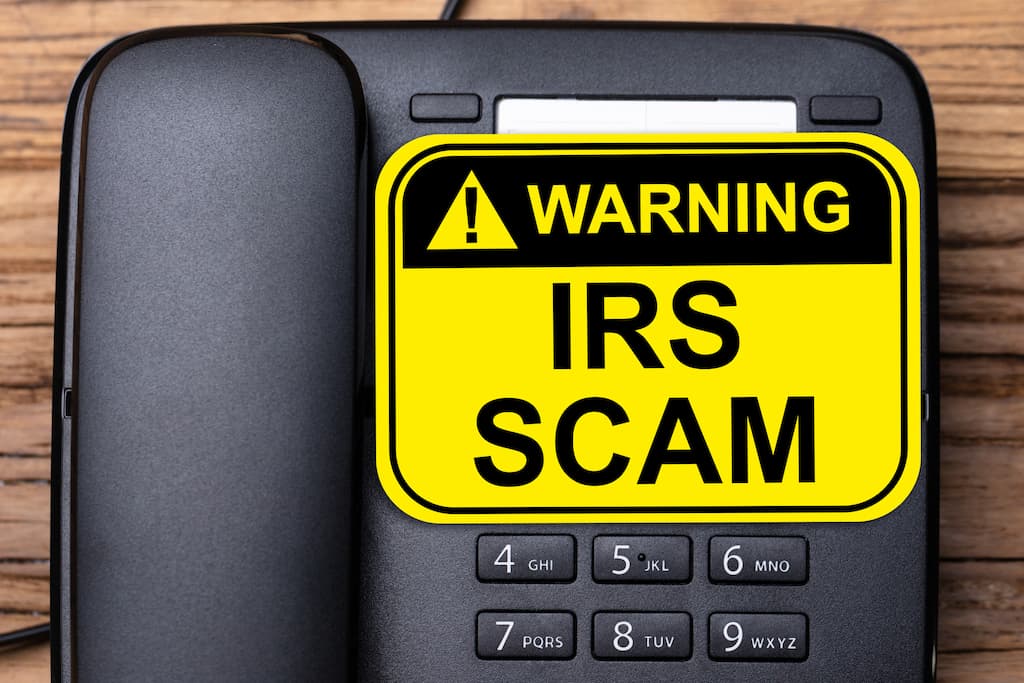
IRS private debt collection impersonation scams cost taxpayers millions every year. The private debt collection program made these scams more sophisticated.
Here’s your verification process. Never trust a phone call alone. You’ll receive Letter 3711A from the IRS first, then CP40 naming the specific agency, then a letter from the private collection agency itself.
No letters? It’s a scam. Phone call before the letters? Scam. Request for payment to the collection agency instead of the U.S. Treasury? Scam. Demands for payment via prepaid debit cards, gift cards, or wire transfers? Definitely a scam.
Legitimate private collectors identify themselves by name and provide their unique employee identification number. They tell you they’re calling about a federal tax debt. They inform you that any payment must be made to the U.S. Treasury. They offer to transfer you to an IRS representative to verify the debt.
If you have any doubt, hang up. Call the private collection agency using the number on their written correspondence. Better yet, call the IRS directly at 1-800-829-1040 and verify that your account has been assigned to a private collector.
How to Recall Your Debt from Private Collection Agencies
You can get your account back from the private collector at any time. Contact the agency directly and state clearly that you want your account returned to the IRS. Put this in writing if possible. The collection agency must honor this request.
Why would you do this? Private collectors can only negotiate limited installment agreements – $50 per month or less, with repayment within 60 months. But the IRS offers much more flexible payment options. You might qualify for a larger installment agreement. You might be eligible for Currently Not Collectible status if you’re experiencing financial hardship. You might have grounds for an Offer in Compromise.
Private collectors can’t help with those options. Once your account returns to the IRS, you can work with an IRS representative or hire a tax attorney who understands the full range of resolution strategies available.
Strategic Considerations: Private Collector vs. IRS Direct

Dealing with a private collection agency through IRS private debt collection is almost never in your best interest if you have any financial complexity.
The private collector’s goal is simple – get you to pay as much as possible as quickly as possible. They earn a commission on what they collect. They have no incentive to explore better options for you.
When you agree to a $50 monthly payment plan with a private collector, you’re locked in for up to 60 months. But what if your financial situation means you qualify for Currently Not Collectible status? What if you could negotiate an Offer in Compromise and settle the debt for 15 cents on the dollar?
Consider this. You owe $25,000 in back taxes. A private collector offers you a $50 monthly payment plan over 60 months – that’s $3,000 total. Meanwhile, interest and penalties continue accruing on the remaining $22,000. This example highlights how IRS private debt collection can lead to higher long-term costs if not handled strategically.
Or you recall the debt to the IRS, work with a tax attorney, and discover you qualify for an Offer in Compromise. You submit a comprehensive financial analysis and settle the entire $25,000 debt for $5,000. Same debt. Completely different outcome.
The IRS has 10 years from the assessment date to collect your tax debt. After that, the debt expires. Every month that passes brings you closer to that expiration date. This collection window applies regardless of whether your case is handled directly by the IRS or through IRS private debt collection.
IRS private debt collectors don’t consider statute of limitations strategy. But a tax attorney does. Sometimes the best approach is negotiating minimal payments while the clock runs out. Sometimes it’s pursuing Currently Not Collectible status. Sometimes it’s an aggressive Offer in Compromise that eliminates the debt entirely.
What to Do If You Receive a Private Collection Agency Notice
You’ve received the letters. Your tax debt has been assigned through IRS private debt collection. What’s your next move?
Don’t panic. Don’t ignore it. And absolutely don’t commit to any payment arrangement until you understand your full range of options.
First, verify everything. Confirm that the debt is legitimate and the collection agency is authorized. Use the verification process I outlined earlier.
Second, request that your account be returned to the IRS. Exercise your right to recall the debt from the private collector. This gives you access to the full range of IRS resolution options.
Third – and this is critical – consult with a qualified tax attorney before committing to any payment plan or resolution strategy. The tax attorneys at Silver Tax Group have helped clients resolve over $128 million in tax debts because we understand the strategic considerations that most taxpayers and private collectors miss entirely.
We analyze your complete financial situation. We evaluate every resolution option available under the Internal Revenue Code. We negotiate directly with the IRS using the legal authority and procedural knowledge that comes from 15+ years of tax controversy experience.
Sometimes the best approach is an installment agreement. Sometimes it’s Currently Not Collectible status. Sometimes it’s an Offer in Compromise. Sometimes it’s a combination of strategies that addresses immediate collection pressure while building toward long-term resolution.
But you can’t evaluate those strategies by talking to a private collector who’s trained to get you to commit to payment as quickly as possible.
Your tax debt isn’t going away by itself. The IRS will collect, one way or another. The question is whether you pay tens of thousands more than necessary because you didn’t understand your options, or whether you resolve this strategically and protect your financial future.
The IRS private debt collection program creates confusion by design. It separates you from the IRS representatives who could actually help you explore alternative resolutions. It pushes you toward quick payment arrangements that may not serve your interests.
You don’t have to play that game. You have legal rights. You have strategic options. And you have the right to professional representation that actually serves your interests instead of the government’s collection goals.
Contact Silver Tax Group today for strategic guidance on IRS private debt collection and all available resolution options. We’ll review your situation, explain your options in plain English, and help you make strategic decisions based on tax law and procedure – not collection agency pressure. Your tax debt is serious. Your response should be strategic.
Frequently Asked Questions About IRS Private Debt Collection
- What is the IRS Private Debt Collection Program?
The IRS private debt collection program assigns certain inactive tax debts to authorized private collection agencies to attempt collection on behalf of the IRS. It does not change your obligation to pay the IRS. - How do I know if my IRS debt has been assigned to a private debt collector?
You’ll receive IRS Letter 3711A, then CP40 naming the authorized private collector. The agency sends their letter before calling. Calls without this paper trail are likely scams. - Can IRS private debt collectors enforce collection actions?
No. Private collectors cannot file liens, seize assets, garnish wages, or sue you. Those enforcement powers remain exclusively with the IRS. - What rights do I have when dealing with IRS private debt collection?
You have the right to request that your account be returned to the IRS. Collectors must comply and cannot compel you to accept limited payment plans they offer. - How can I protect myself from scams related to IRS private debt collection?
Never rely solely on a phone call. Verify written notices, confirm the agency is one of the four authorized collectors, and never pay outside IRS-approved methods. - Should I negotiate with a private collector or return the debt to the IRS?
Returning your debt to the IRS gives you access to broader resolution options, like Offers in Compromise or Currently Not Collectible status, which private collectors cannot provide.